Bonded Warehouse vs General Warehouse: What Every MNC Importer Must Know
Customs-bonded storage can defer duty by months and unlock cashflow for MNC importers. Here's how bonded warehouses differ from general storage, with compliance, timelines and cost benchmarks.
For MNCs importing into India, choosing between a bonded warehouse and a general warehouse is a working-capital decision, not just a storage one. A correctly structured bonded operation can defer customs duty by 6–12 months and unlock crores in cashflow.
What exactly is a bonded warehouse?
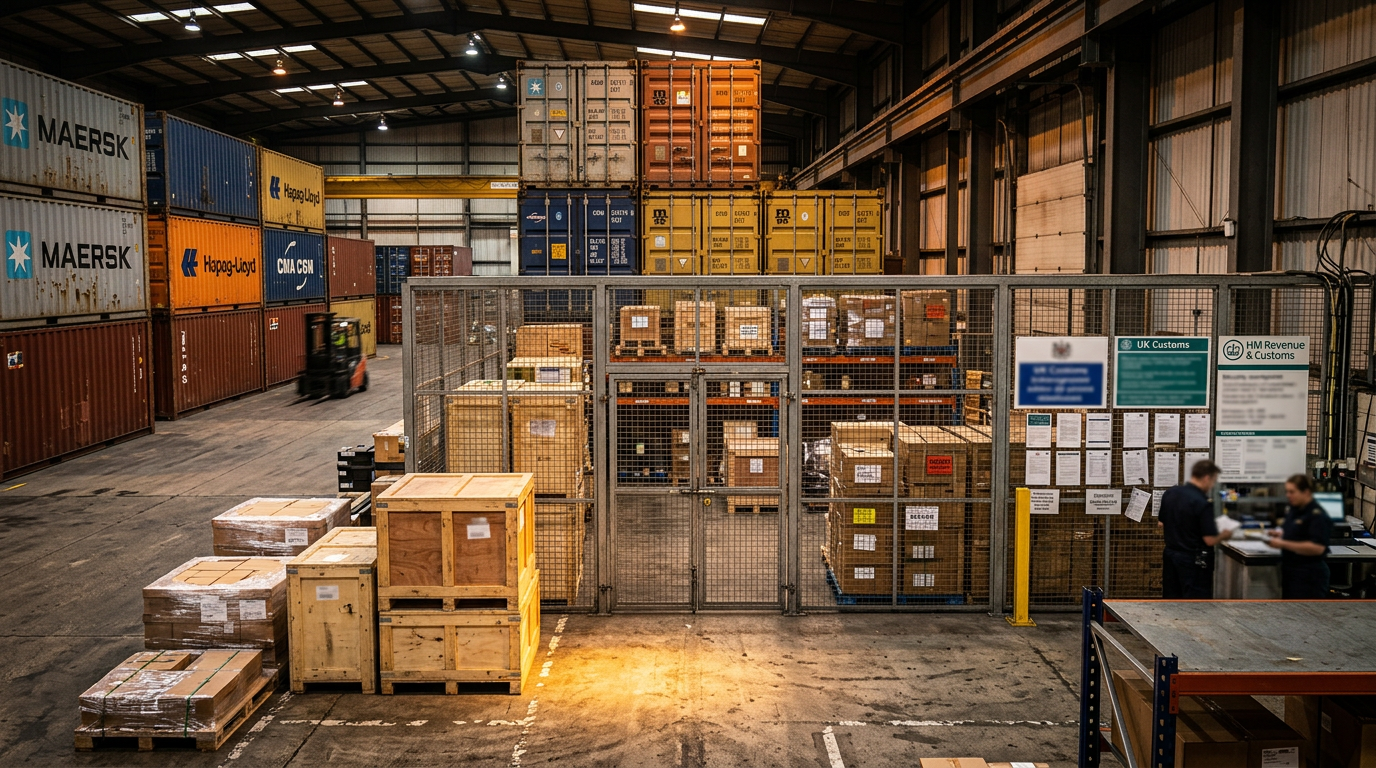
A bonded warehouse is a customs-licensed facility (under Section 58/58A of the Customs Act, 1962) where imported goods can be stored without payment of import duty until they are actually cleared for home consumption. Duty becomes payable only when goods leave the bonded zone.
General warehouses, by contrast, hold duty-paid goods. Once duty is paid at the port, your cash is locked into inventory whether or not it sells.
When bonded storage delivers real ROI
Bonded warehousing makes sense for: high-value imports (electronics, machinery, luxury), slow-moving SKUs, re-export-oriented operations, and brands managing INR cashflow against USD-priced imports. The MOOWR scheme (Manufacture and Other Operations in Warehouse Regulations) extends benefits further — duty is deferred indefinitely on inputs used in manufacturing for export.
What changes operationally
Every bonded movement requires bond-officer supervision. Inventory must be tracked in the customs WMS, ex-bond ex-warehouse bills of entry need filing, and the facility must maintain triple-redundant CCTV with 90-day retention. A reputable bonded operator handles all of this in-house — you should not be filing your own bonded paperwork.
Cost differential and break-even
Bonded warehousing in India typically costs 18–28% more per pallet than general storage, but for goods with 12%+ import duty, you break even on cashflow savings within 90 days of storage. For 28% GST + 10% basic customs duty SKUs, bonded storage pays for itself in 35–45 days.
Frequently asked
Quick answers
How long can goods stay in a bonded warehouse in India?+
Up to one year by default, extendable to five years for capital goods. Goods stored under MOOWR have no time limit while used in manufacturing for export.
Can I move goods between two bonded warehouses?+
Yes, via inter-bond transfer (Section 67) with the proper bond-to-bond movement permission and triple-seal compliance.
Is bonded warehousing only for large importers?+
No. Stellar Warehouse offers shared bonded zones starting at a single pallet, so SMEs and startups can also defer duty without committing to a full facility.
Need warehouse space like this?
Tell us about your cargo. We respond within the hour.
Request a Quote →